
- Home/
- Buy Propecia at Low Price Online in the United States
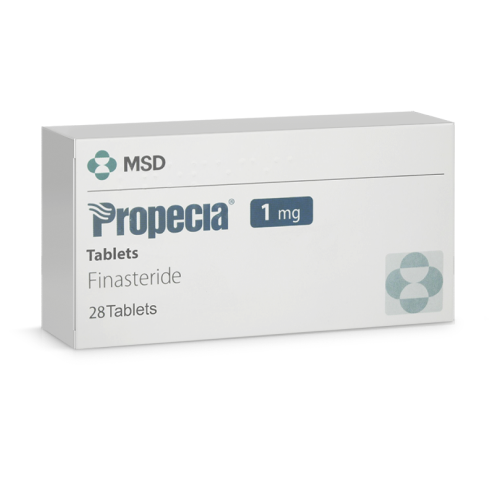
Propecia is a prescription medication used to treat male pattern hair loss in adult men. Its active ingredient, finasteride, works by targeting hormones that shrink hair follicles. Before considering Propecia, every patient should understand: results take time—and the decision to start treatment is as much about expectations and comfort with potential side effects as it is about regrowing hair.
Is Propecia the Right Choice for Your Hair Loss?
The first question isn’t “What is Propecia?”—it’s “Is this the approach that fits my hair loss, my goals, and my risk tolerance?” Not every man losing hair needs, wants, or benefits from a prescription. Propecia, with its active ingredient finasteride, is approved by the FDA for male pattern baldness (androgenetic alopecia) in adult men only. If your hair loss is patchy, recent, or accompanied by other health symptoms, you may not be a candidate.
Propecia is not a cure-all. It doesn’t work instantly, and it won’t regrow all lost hair. Its main power: slowing, stopping, or modestly reversing thinning at the crown and mid-scalp. Temple recession is usually less responsive. Unlike over-the-counter options, Propecia requires a prescription, which means a medical assessment is not only standard, but crucial.
- Best fit: Men 18–41 with mild to moderate male pattern baldness, especially crown thinning.
- Less benefit: Men with complete baldness or longstanding hair loss; temple-only recession; women (safety and effectiveness not established).
- Non-candidates: Anyone with unexplained, sudden, or patchy hair loss—or with significant underlying health concerns. Always see a healthcare provider to rule out other causes first.
Some men wonder whether to start with Propecia, minoxidil (Rogaine), or both. The choice depends on your specific pattern, comfort with side effect profiles, and willingness to commit to daily use for months or years. Most importantly, the decision should reflect your own priorities: how much regrowth you expect, how you feel about the potential risks, and whether you’re ready for a long-term routine.
How Propecia Works: What Finasteride Changes—and Why It Matters
Finasteride does something no over-the-counter remedy can: it blocks type II 5-alpha reductase, the enzyme that turns testosterone into dihydrotestosterone (DHT). DHT is the main culprit in male pattern hair loss—it shrinks hair follicles, leading to thinner, shorter hairs over time. By lowering scalp DHT levels, finasteride slows or halts this miniaturization process.
“Patients often expect visible hair regrowth in weeks, but that’s not how Propecia works. The first sign it’s working is less shedding, not new growth. If you’ve stabilized your hair loss after 6–12 months, that’s a win—even if you don’t see dramatic regrowth. I always tell my patients: think of Propecia as a brake pedal, not a rewind button.”
- DHT (Dihydrotestosterone):
- A hormone derived from testosterone, responsible for shrinking hair follicles in genetically predisposed men.
What does this mean in practice? Most patients who benefit from Propecia notice a slowing or stopping of hair loss after 3–6 months. Regrowth, when it happens, is usually subtle: a bit more density at the crown, fewer visible scalp areas. The process is gradual and, sometimes, frustratingly uneventful. The upshot: if you’re looking for instant transformation, Propecia isn’t engineered for that. Its true value is protecting what you have left—sometimes, for years.
Real Results: What to Expect If You Start Propecia
Stat: In major clinical trials, up to 83% of men taking Propecia for 2 years halted visible hair loss, and about two-thirds saw some regrowth. (FDA)
The initial months can be anticlimactic. Hair may seem to continue thinning, or even shed a bit more at first (“shedding phase”)—a sign, paradoxically, that dormant follicles are cycling back into growth. Most men need 3 to 6 months to see a plateau; visible results may take up to 12 months. Don’t judge success by week two—this is a marathon, not a sprint.
- First 3 months: Stabilization phase; less shedding is a good sign, but not everyone notices it.
- 6–12 months: Expect to see maximal benefit: less thinning, thicker appearance at the crown, and a sense of “holding the line.”
- Beyond 12 months: Continued benefit relies on daily use. Stop taking Propecia, and any gains are typically lost within 9–12 months. The process is reversible—both progress and setbacks.
Clinical Tip: Keep photos. Hair growth is gradual; seeing change over time is easier with consistent documentation.
Real-world satisfaction varies. Some men are delighted to stop losing hair, even with little new growth. Others, hoping for visible reversal, may be disappointed. Honest conversations with your provider about expectations are crucial, especially if you’re balancing hope against the patience required for results.
Which Side Effects Matter Most with Propecia—and When to Act
Sexual side effects are what most men fear—and what drive most online debate about Propecia. The reality: in large clinical trials, about 1.3–3.8% of men report issues like decreased libido, erectile difficulty, or diminished semen volume. For most, these effects are mild and resolve after stopping the medication; for a small minority, symptoms linger.
- Decreased libido — reported by 1–2% of patients. May begin within the first months of therapy, often improves over time or with discontinuation.
- Erectile dysfunction — up to 1.3% in studies; usually mild. In rare cases, can persist longer after stopping.
- Ejaculatory changes — less noticeable, but reduced semen volume is possible. No reported impact on fertility with standard doses for hair loss.
- Breast tenderness or enlargement — rare; warrants prompt evaluation, as it may signal a more serious reaction.
- Mood changes (e.g., depression, anxiety) — rare, but reported. Causality is debated, but persistent mood changes should be discussed with your doctor.
| Side Effect | Frequency | When to Contact a Doctor |
|---|---|---|
| Decreased libido | 1–2% | If persistent or impacts daily life |
| Erectile dysfunction | 1–1.3% | If persistent or distressing |
| Ejaculatory changes | 0.8–1.2% | If concerns about fertility or ongoing discomfort |
| Breast tenderness or enlargement | <1% | Immediately—rule out serious conditions |
| Mood changes | Rare (exact rate unknown) | If new, severe, or worsening |
For most men, these risks are low, but not zero. A small percentage report persistent effects (“post-finasteride syndrome”), though this remains controversial in the medical community, and causation is not firmly established. If new or unusual symptoms develop, especially after stopping Propecia, follow up with your physician—not all symptoms are drug-related, and many will resolve with time or medical support.
Propecia vs. Other Hair Loss Treatments: What the Data and Experience Reveal
| Attribute | Propecia (Finasteride 1 mg) | Minoxidil (Topical) | Hair Transplant Surgery |
|---|---|---|---|
| Prescription Required | Yes | No (OTC) | Consultation required |
| Main Mechanism | Blocks DHT | Increases blood flow to follicles | Physically replaces lost follicles |
| Onset of Effect | 3–6 months for stabilization | 3–6 months for regrowth | Immediate (post healing) |
| Best for | Crown and mid-scalp thinning | Early-stage thinning or combination therapy | Advanced, permanent loss |
| Common Side Effects | Sexual effects, mood changes | Scalp irritation, unwanted facial hair | Surgical risks, scarring |
| Response Rate | ~83% stabilization, ~65% regrowth | ~60% regrowth (varies by adherence) | Nearly 100% (in transplanted areas) |
| Insurance Coverage | Rare (cosmetic) | Rare (cosmetic) | Rare (cosmetic, high out-of-pocket cost) |
| Need for Ongoing Use | Yes—loss resumes if stopped | Yes—regrowth lost if stopped | No (after surgery, results are lasting) |
Interpretation: Propecia stands out for its convenience—one pill a day, no messy application, no surgical downtime. Compared to minoxidil, finasteride offers stronger evidence for slowing progression, especially at the crown, with a side effect profile that is lower overall, but potentially more significant for individual patients. Hair transplant is a one-time intervention but comes with higher costs and procedural risks. Most men starting Propecia are in the “preserve what I have” group. Combination therapy (Propecia plus minoxidil) is common in practice, and often offers additive benefit for motivated patients willing to commit to both regimens. Insurance rarely covers any intervention for cosmetic hair loss in the United States.
Who Should Not Take Propecia: The Critical Warning List
- Absolute contraindication: Women (especially if pregnant or may become pregnant); exposure to crushed or broken tablets can cause birth defects in a male fetus.
- Absolute contraindication: Children and adolescents; safety and effectiveness not established.
- Absolute contraindication: Men with known hypersensitivity to finasteride or any component of Propecia.
- Relative contraindication: Men with significant liver disease—finasteride is metabolized in the liver; caution and medical oversight required.
- Relative contraindication: Men with a history of prostate cancer, or those undergoing PSA testing for prostate screening—finasteride lowers PSA levels and can mask early cancer signs.
If you fall into any of these groups, do not start Propecia. Always discuss your full medical history—including liver health and cancer screening plans—with your doctor before beginning therapy. These warnings are not paperwork—they are risk management that protects your long-term health.
Practical Guide: Getting and Using Propecia in the United States
Propecia is a prescription-only medication in the United States. Federal law prohibits dispensing without a valid prescription from a licensed healthcare provider. This applies whether you pick up your medication at a local pharmacy, use a mail-order service, or access a telemedicine platform.
Access Tip: Most insurance does not cover Propecia for hair loss, categorizing it as cosmetic. Generic finasteride is widely available and significantly less expensive than brand-name Propecia; ask your pharmacist about current pricing options.
Here’s how the process usually works:
- Book an appointment with your primary care physician, dermatologist, or a specialized hair loss clinic. Telemedicine providers can also prescribe Propecia after an online consultation.
- Expect a medical history review and brief exam; labs are usually not required unless there are red flags. Your doctor will discuss risks, expected benefits, and will likely screen for contraindications (see previous section).
- If prescribed, fill your prescription at a local or online pharmacy registered in the United States.
- Follow the prescribed instructions: standard dose is one 1 mg tablet orally per day, with or without food.
- Generic Finasteride:
- FDA-approved generic versions are considered clinically equivalent to brand-name Propecia for hair loss, but costs can vary dramatically. Both require a prescription.
What about online pharmacies or imported medications? The FDA warns against purchasing medications from unverified sources, due to risks of contamination, incorrect dosage, or counterfeit drugs. Only use licensed, US-based pharmacies or reputable telehealth services operating within US law.
Propecia is not a one-month experiment. It’s a long-term commitment. If you stop, hair loss resumes—sometimes faster than it started. Build regular follow-ups with your prescribing physician into your plan to monitor for side effects, efficacy, and any required lab work (especially if you have other health conditions).
FAQ: Propecia Questions That Actually Get Asked
- How long does Propecia take to work for hair loss?
- Most men notice less shedding within 3 to 6 months, but visible changes (like more density at the crown) may take up to 12 months. If nothing changes after a year, talk with your doctor about other options.
- Will I lose my hair again if I stop taking Propecia?
- Yes. Any benefit from Propecia is lost within 9–12 months after stopping. Hair loss usually resumes at the rate it would have progressed without treatment.
- Can I use Propecia and minoxidil together?
- Yes, many dermatologists recommend combination therapy for men seeking maximum benefit. There is no known negative drug interaction between the two when used as directed.
- Is there a generic for Propecia, and is it as good?
- Yes, generic finasteride 1 mg is FDA-approved and considered equivalent in efficacy and safety to brand-name Propecia for hair loss indications.
- Are sexual side effects from Propecia permanent?
- Most men who experience sexual side effects recover after stopping the medication. Rarely, some symptoms persist. If you notice ongoing problems, consult your physician for further evaluation and support.
- Is Propecia safe for men trying to father a child?
- Clinical data do not show an increased risk of birth defects from men taking finasteride, but if your partner is pregnant or planning pregnancy, discuss this with your doctor. Women should never handle crushed or broken tablets due to risks during pregnancy.
- Do I need regular blood tests while on Propecia?
- Routine blood monitoring is not required for healthy men. If you have liver disease or are undergoing prostate cancer screening, your doctor may recommend periodic tests. Always inform your provider about all medications and supplements you use.
References
- U.S. Food and Drug Administration – Propecia (Finasteride) Information
- American Academy of Dermatology – Hair Loss Clinical Guidelines
- Mayo Clinic – Finasteride (Oral Route) Description and Brand Names
- Propecia Prescribing Information, Merck & Co., 2023
- PubMed – Finasteride in Androgenetic Alopecia: Systematic Reviews
- ClinicalTrials.gov – Finasteride for Male Pattern Baldness
- FDA – Medication Safety Alerts and Consumer Information